
Try Scanning New Products with Halal AI Mobile App


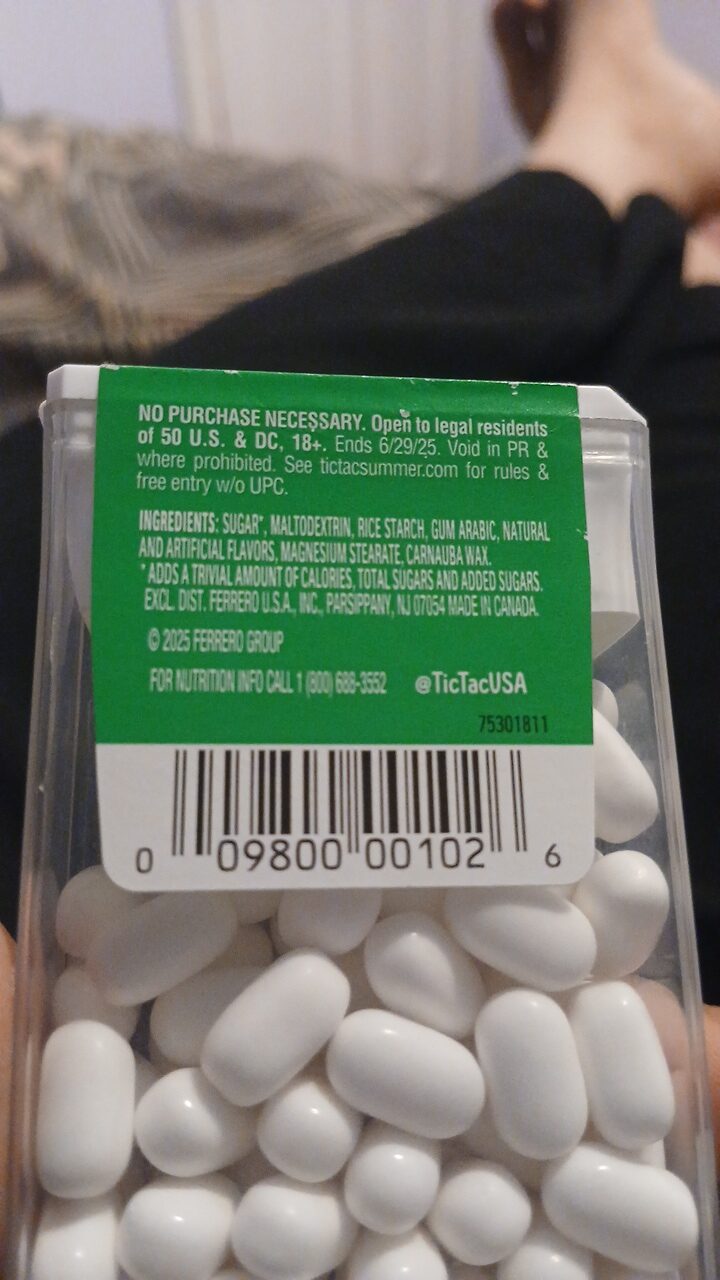
Barcode: 009800001026
tic tac
HALAL
📝 Reason: The product ‘tic tac’ contains ingredients that are generally considered Halal, with the exception of ‘natural and artificial flavors’ and ‘magnesium stearate’, which are Doubtful due to lack of specific source information. According to Islamic dietary laws, products must be free from Haram ingredients and processes. The presence of Doubtful ingredients requires further verification for Halal compliance.
🏷️ Category: Candy, Breath Mints
📄 Certificates: Made In Canada, Vegetarisch
Ingredients:
Details
Understanding the Halal Status of Tic Tac
The iconic Tic Tac has been a favorite breath mint for many. But if you’re adhering to Halal dietary laws, you might be wondering, is Tic Tac Halal? In this post, we’ll dive into the ingredients of Tic Tac, explore their Halal status, and clarify the presence of any controversial components.
What Makes a Product Halal?
In Islamic dietary law, a product is considered Halal if it is free from any Haram (non-permissible) substances. This entails not only the ingredients but also the methods of production and handling that adhere to Islamic principles. For a product like Tic Tac, it’s vital to ensure that all constituents are sourced ethically and meet these guidelines.
Ingredient Breakdown
The primary components of Tic Tac include:
- Sugar
- Maltodextrin
- Rice Starch
- Gum Arabic
- Natural and Artificial Flavors
- Magnesium Stearate
- Carnauba Wax
Sugar
Sugar is derived from plants and is generally considered Halal. The source of sugar is usually from cane or beets, both of which are permissible under Halal standards. More on sugar’s Halal status.
Maltodextrin
Maltodextrin is produced from starch. While it is often Halal, the source should ideally be verified to ensure it is not derived from Haram origins. Typically, it is derived from corn or wheat, both of which are Halal. Learn about maltodextrin here.
Rice Starch
This ingredient comes from rice, making it plant-derived and, thus, generally Halal. It is often used as a thickener in food products and is acceptable in Halal diets. More information can be found here.
Gum Arabic
Derived naturally from the sap of the acacia tree, gum arabic is Halal. It is commonly used as a stabilizer or thickening agent. Read more about gum arabic.
Natural and Artificial Flavors
The Halal status of flavors can be complex. Without specific information about the source, the status remains doubtful. It’s crucial to ascertain whether the flavors used are plant-derived or conform to Halal standards. Consultation with the manufacturer or further verification is encouraged.
Magnesium Stearate
This compound can come from both plant or animal sources, which again makes its Halal status uncertain without detailed source information. It often functions as a lubricant in the manufacturing process. For clarity on its Halal compliance, source verification is needed here.
Carnauba Wax
Derived from the leaves of the carnauba palm, this wax is Halal and serves as a glazing agent in candy products. It is safe for consumption and complies with Halal standards. More on carnauba wax can be found here.
Conclusion
In summary, the majority of the ingredients in Tic Tac are generally Halal with the exception of some, notably the natural and artificial flavors and magnesium stearate, which need further verification to ascertain their Halal compliance. If you’re strict about Halal consumption, consider contacting the brand directly for clarification on these ingredients to make an informed decision.
For those looking for a refreshing mint option while often on the go, Tic Tac certainly has its charm. However, it’s essential to be knowledgeable about what you consume. Always check for Halal certificates or consult with the community for assurance.
