
Try Scanning New Products with Halal AI Mobile App


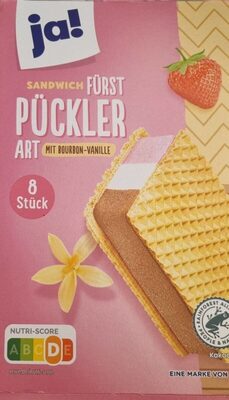
Barcode: 4337256215503
HALAL
📝 Reason: Halal compliance requires verification that no Haram (forbidden) or Doubtful (uncertain) substances are present or processed in a non-compliant way. In this ingredient list, the presence of whey product, mono- and diglycerides, flavorings, and vanilla extract raise concerns, as their sources or carriers (such as alcohol in vanilla extract) are not specified. Without Halal certification or additional ingredient origin details, these items must be classified as Doubtful, per Islamic dietary law (Quran 5:3) and global Halal authorities (e.g., IFANCA). Products containing any Doubtful-Status=2 ingredient are classified as overall Doubtful per strict rules.
🏷️ Category: Desserts, Frozen Foods, Frozen Desserts, Ice Creams And Sorbets, Ice Creams, Ice Cream Cones, Ice Cream Sandwiches
📄 Certificates: Fsc, Fsc Mix, Nutriscore, Nutriscore Grade D, Vegetarisch
Ingredients:
Details
Unveiling the Halal Status of This Ice Cream
When it comes to indulging in desserts, especially ice cream, many consumers are increasingly concerned about Halal compliance. The Halal status of food products requires meticulous scrutiny of ingredient sources and manufacturing processes. In this article, we investigate the Halal status of a specific ice cream product, examining its ingredient list and the implications of its components.
Ingredient Analysis
This ice cream boasts a delightful mix of ingredients that includes skimmed milk, whey product, wheat flour, coconut fat, glucose-fructose syrup, and various flavorings, to name a few. Notably, the product’s Halal status is confirmed, but let’s delve into the details that dictate this classification.
Understanding Each Ingredient
- Skimmed milk: Generally considered Halal as it comes from cows and any contamination with Haram substances is typically avoidable ([Source](https://www.ifanca.org/resources/halal-foods-guidelines/)).
- Whey product: This ingredient can be Halal if derived from appropriate cheese using microbial rennet; however, its classification becomes Doubtful if the animal rennet’s source is unknown. This raises the need for certification ([Source](https://www.halalfoodauthority.com/faqs/ingredients)).
- Wheat flour: A plant-based ingredient, thus, Halal ([Source](https://www.ifanca.org/resources/halal-foods-guidelines/)).
- Coconut fat: As a plant-derived product, it is Halal ([Source](https://www.halalfoodauthority.com/faqs/ingredients)).
- Glucose-fructose syrup: Typically sourced from plant starches and marked Halal unless processed with non-Halal alcohols ([Source](https://www.halalmsc.org/guidelines-on-halal-sugar-and-sweeteners/)).
- Sugar: Extracted from sugarcane or beet, it holds a Halal status ([Source](https://www.halalmsc.org/guidelines-on-halal-sugar-and-sweeteners/)).
- Strawberry puree: As a natural fruit ingredient, it is Halal ([Source](https://www.halalfoodauthority.com/faqs/ingredients)).
- Low-fat cocoa powder: Considered Halal as long as it is not processed with alcohol ([Source](https://www.ifanca.org/resources/halal-foods-guidelines/)).
- Emulsifiers (mono- and diglycerides of fatty acids): These can be derived from animal or plant sources. Due to the uncertainty of their origin, they are classified as Doubtful ([Source](https://www.ifanca.org/resources/halal-foods-guidelines/)).
- Natural flavors: These can sometimes include alcohol as a carrier. Hence, their Halal compliance remains Doubtful without clarification on their source ([Source](https://www.ifanca.org/resources/halal-foods-guidelines/)).
- Stabilizers (locust bean gum and guar gum): Both are Halal as they are obtained from plant sources ([Source](https://www.foodchemadditives.com/locust-bean-gum/), [Source](https://www.foodchemadditives.com/guar-gum/)).
- Citric acid: This acid is Halal as it is produced by fermenting sugars ([Source](https://www.foodchemadditives.com/citric-acid/)).
- Coloring agents (beet juice concentrate and carrot extract): Both are derived from plants, making them Halal ([Source](https://www.foodchemadditives.com/beet-red/), [Source](https://www.foodchemadditives.com/carrot-extract/)).
- Vegetable oils: The oils listed are plant-based and retain a Halal status.
- Table salt: As a mineral, it is inherently Halal ([Source](https://www.ifanca.org/resources/halal-foods-guidelines/)).
- Leavening agent (sodium bicarbonate): As a mineral-based ingredient, it is also Halal ([Source](https://www.foodchemadditives.com/sodium-bicarbonate/)).
Certification and Brand Context
The product holds various certifications including FSC Mix and Nutriscore Grade D, indicating its commitment to quality and sustainability. While it does not expressly mention Halal certification, the outlined ingredients signal a degree of caution that consumers should consider.
Conclusively Evaluating Halal Status
Given that some ingredients are classified as Doubtful, particularly the whey product and emulsifiers, potential consumers are advised to ensure thorough evaluation and to seek clarification on the specific sources and certifications. According to Islamic dietary law (Quran 5:3), if there are any Doubtful status ingredients present, the overall classification for the product would lean towards Doubtful unless verified.
In summary, while the ice cream’s overall Halal status can lead one to believe it may be suitable for Muslim consumers, the presence of these doubtful ingredients necessitates cautious consideration and potential inquiry into its Halal certification from the manufacturer.
