
Try Scanning New Products with Halal AI Mobile App


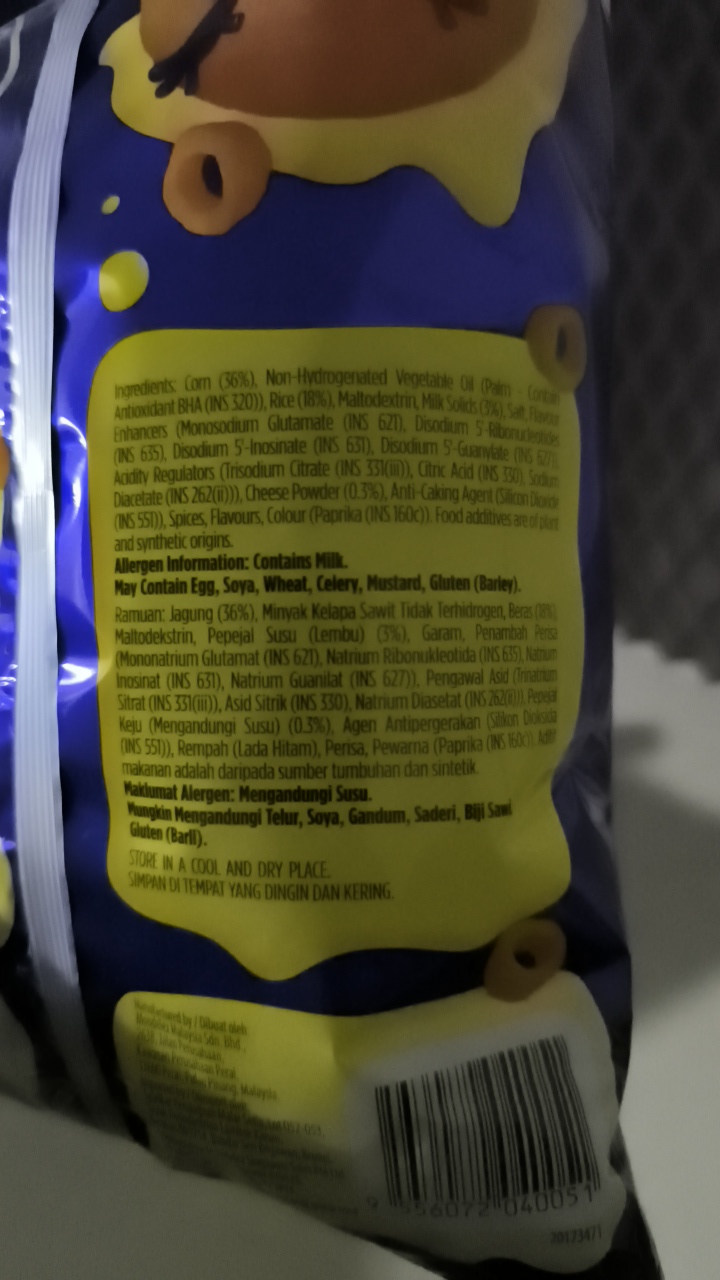
Barcode: 534014040054
unknown
HALAL
📝 Reason: The product’s E-codes and most ingredients are plant/mineral-based or synthetically produced and Halal. However, flavour enhancers such as disodium 5′-ribonucleotides (E635), disodium 5′-inosinate (E631), disodium 5′-guanylate (E627), cheese powder, and unspecified flavours may be derived from animal or microbial sources, including non-Halal or questionable origins. Without explicit Halal certification or declaration, these ingredients remain doubtful. According to Quran 5:3, Muslims are required to avoid doubtful or Haram products. Organizations such as IFANCA recommend caution with flavor enhancers and cheese. See: https://www.ifanca.org/faq/flavors-halal-status/, https://www.eat-halal.com/ingredient-dictionary/cheese/, and www.foodchemadditives.com.
🏷️ Category: Snacks
📄 Certificates: Store In A Cool And Dry Place, Simpan Di Tempat Yang Dingin Dan Kering
Ingredients:
Details
Understanding the Halal Status of the Unknown Product
In today’s food industry, understanding whether a product is Halal is essential for many consumers. The unknown product we are discussing here has been identified as Halal. This comprehensive analysis will delve into its components, E-codes, and overall Halal certification status.
Halal Certification and Status Explanation
The unknown product is labeled as Halal, indicating that its ingredients conform to the Islamic dietary laws. However, while it is categorized as Halal, certain ingredients warrant a closer look to ensure that they do not stem from non-Halal sources. According to the Quran, specifically 5:3, Muslims are required to abstain from foods with dubious origins or that may contain Haram (forbidden) substances.
Ingredients Breakdown
Let’s review the core ingredients and their Halal status:
- Corn (36%): A natural plant ingredient, considered Halal without any risk of Haram contamination.
- Non-hydrogenated vegetable oil (palm): Derived from plants, this oil is inherently Halal.
- Antioxidant BHA (INS 320): This synthetic compound is Halal as long as it does not contain alcohol.
- Rice (18%): A staple grain that is naturally Halal.
- Maltodextrin: Usually sourced from starch options like corn or wheat; it is Halal unless contaminated.
- Milk solids (3%): As a dairy by-product from cows, these are considered Halal unless there are contamination issues.
- Salt: A mineral that is always Halal.
- Flavor enhancer (Monosodium glutamate) (E621): Typically synthetic or plant-based, usually Halal unless produced using alcohol.
- Disodium 5′-ribonucleotides (E635), Disodium 5′-inosinate (E631), Disodium 5′-guanylate (E627): These flavor enhancers can originate from either animal or microbial sources, creating uncertainty. Without clear Halal certification, they remain a point of concern.
- Acidity regulator (Trisodium citrate) (E331): Generally Halal, derived from safe sources.
- Citric acid (E330): Usually obtained through fermentation, Halal certified.
- Sodium diacetate (E262): An acid salt that is deemed Halal.
- Cheese powder (0.3%): This may contain non-Halal animal-derived rennet unless stated otherwise.
- Anti-caking agent (Silicon dioxide) (E551): A mineral-based additive that is always Halal.
- Spices and flavors: Generally plant-based, but details about their sourcing could expose potential non-Halal components.
- Color (paprika) (E160c): A natural colorant from plants, Halal-friendly.
E-Number Analysis
Below is a summary of the E-codes present in the unknown product, accompanied by their Halal implications:
- E320 (BHA): Safe if produced without alcohol carriers.
- E621 (MSG): Requires confirmation of production methods for clarification on its source.
- E635, E631, E627: Presence of derived animal or microbials necessitates caution, especially without clear documentation or certification.
- E331, E330, E262: All these components are Halal.
- E551: Completely Halal.
- E160c: Halal due to being plant-derived.
Conclusion and Recommendations
While the unknown product is labeled as Halal, attention must be given to some dubious ingredients, particularly certain flavor enhancers that can have animal or synthetic origins. Organizations like IFANCA suggest further investigation into the sources of controversial additives to ensure compliance with Halal standards. Always look for certified Halal labels when possible and lean towards products with clear information on their ingredient sources.
For more comprehensive ingredient assessments, resources you can refer to include IFANCA’s FAQ on Halal flavors and Eat Halal’s Cheese Dictionary. Ensure you always do due diligence when selecting food items adhering to Islamic dietary laws.
