
Try Scanning New Products with Halal AI Mobile App


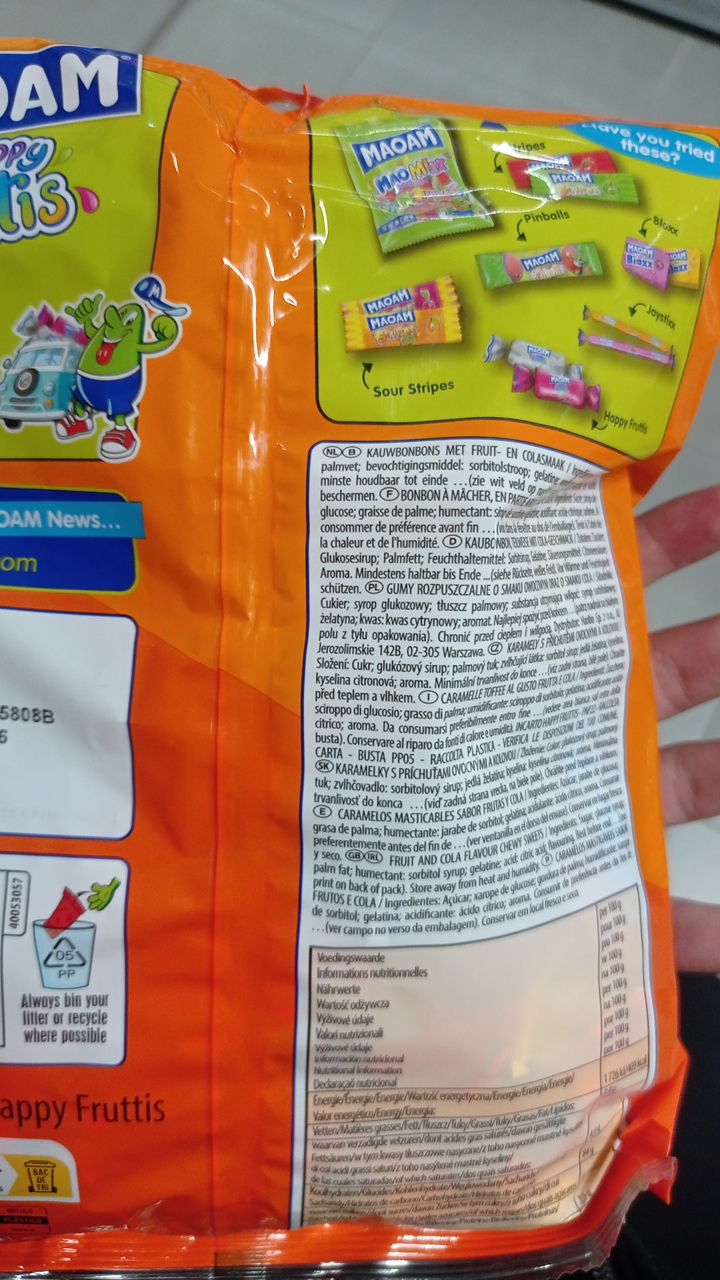
Barcode: 416204534683
Happy Fruttis
DOUBTFUL
📝 Reason: The Halal status remains indeterminate for some components. Final determination requires knowledge of exact formulations and manufacturing processes.
🏷️ Category: Candy
📄 Certificates: Kauwbonbons With Fruit And Cola Flavor, Bonbon To Chew, In Part, Gum Dissolves On The Tongue Or Flavor And Taste Of, Caramel Toffee With Fruit And Cola Flavor, Caramels With Fruity And Cola Flavors, Fruit And Cola Flavor Chewy Sweets, Always Bin Your Litter Or Recycle Where Possible
Ingredients:
Details
Understanding the Halal Status of Happy Fruttis Candy
Happy Fruttis is a popular candy choice among sweet lovers, but for those adhering to dietary restrictions, particularly regarding Halal laws, it’s essential to understand its Halal status. Currently, the Halal status of Happy Fruttis is categorized as DOUBTFUL. This assessment indicates that while many ingredients may be permissible according to Islamic law, certain components require a closer examination due to potential concerns about their origin.
Why is the Halal Status Doubtful?
The doubt surrounding the Halal status of Happy Fruttis arises primarily from the ingredient gelatin. Gelatin can be derived from non-Halal sources, specifically animal-derived products. This means that without a clear indication that the gelatin used in Happy Fruttis has a Halal certification, its status remains uncertain. It is advisable for consumers to look for a Halal logo on the packaging, which would provide assurance about the ingredient’s compliance with Halal standards.
Ingredients Breakdown
- Palm Fat: Permissible in Islam.
- Sorbitol Syrup: Permissible in Islam.
- Gelatin (E441): Doubtful – Check for Halal Logo.
- Glucose Syrup: Permissible in Islam.
- Moisture Retainer: Status uncertain.
- Citric Acid (E330): Permissible in Islam; it acts as an antioxidant.
- Flavoring: Permissible in Islam.
- Sugar: Permissible in Islam.
- Palm Oil: Permissible in Islam.
- Sodium Citrate: Permissible in Islam.
- Humectant: Permissible in Islam.
- Acid: Permissible in Islam.
Diving Deeper into E-Numbers
Understanding E-numbers helps consumers make informed decisions about food products. Here’s a brief overview of the E-numbers mentioned in the ingredients:
- E441 (Gelatin): Derived from collagen, typically from animal parts. Its Halal status highly depends on the source. Ensure to check for Halal certification.
- E330 (Citric Acid): This natural preservative is safe and widely used. It is generally Halal, but it’s always good to verify the sourcing.
Brand and Category Context
Happy Fruttis falls under the Candy category, characterized by its sweet, fruity flavors that appeal to a broad audience. However, consumers are becoming increasingly aware of the ingredients, prompting brands to be more transparent in their labels. The lack of a brand name mentioned for Happy Fruttis raises questions about its sourcing and manufacturing processes.
Conclusion
While Happy Fruttis offers a delightful taste experience, the uncertainty surrounding its Halal status, primarily due to the gelatin component, calls for cautious consumption, particularly for those following Halal dietary laws. Always check for certification and consider contacting the manufacturer for clarification to ensure a safe and enjoyable candy experience.
Ultimately, Happy Fruttis can be enjoyed by many, but due diligence regarding its ingredients is necessary for Halal-conscious consumers. Making informed decisions is key, as it helps foster a better understanding of what goes into our foods and how they align with our values.
