
Try Scanning New Products with Halal AI Mobile App


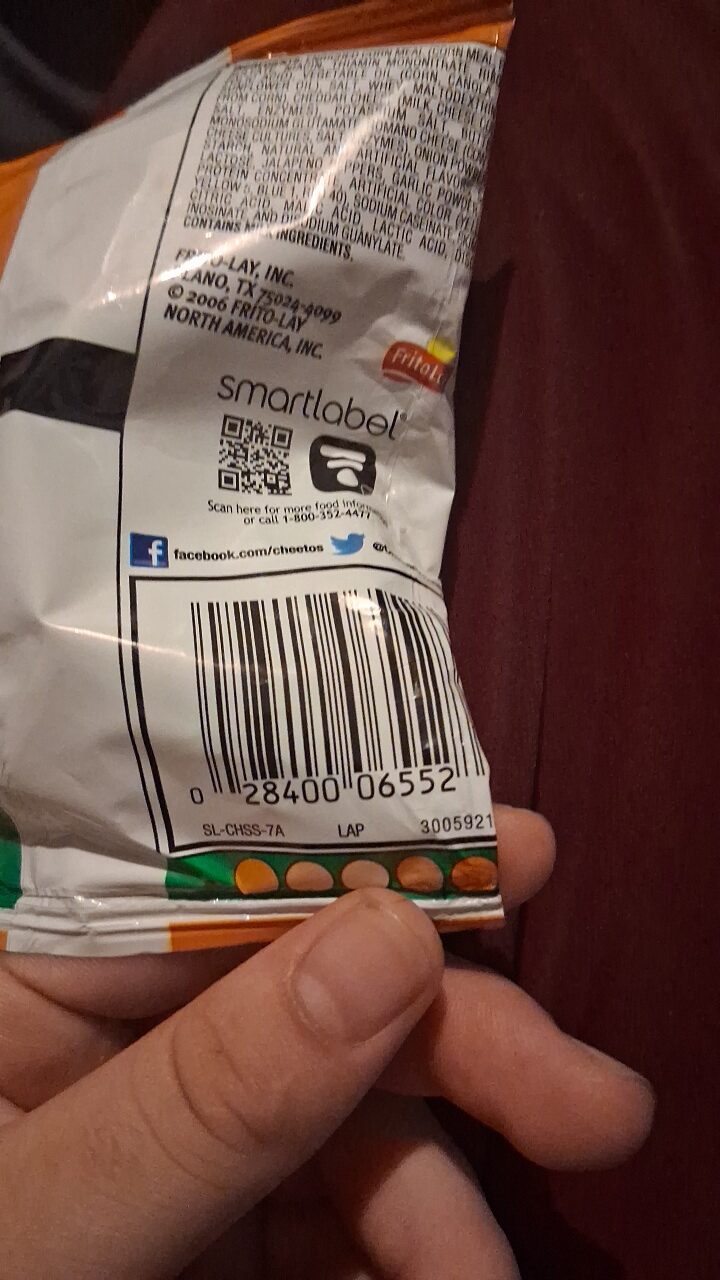
Barcode: 028400006552
cheetos
DOUBTFUL
📝 Reason: Certain ingredients have disputed status among Islamic scholars. Their acceptability may vary by school of thought and regional certification standards.
🏷️ Category: Snacks, Dairy
📄 Certificates: Smartlabel, Scan Here For More Food Info Or Call 1 800 352 4477, Contains Ingredients
Ingredients:
Details
Cheetos: A Crunchy Snack
Cheetos, the beloved cheesy snack, is a favorite among many. However, with the increasing demand for halal-certified snacks, consumers often question the Halal status of their favorite products. In this comprehensive guide, we will delve into the ingredients of Cheetos, specifically addressing its Halal status and the reasons behind the classifications of its components.
Understanding Halal Status
Generally speaking, Halal refers to what is permissible or lawful in Islam. For a product to be labeled Halal, each ingredient must meet the guidelines set out by Islamic law. As a result, the Halal status of any product can be complex and subject to interpretation based on the sources of the ingredients and regional regulatory standards.
Cheetos Ingredients Breakdown
The ingredient list for Cheetos includes a variety of components that warrant closer examination:
- Corn Meal: Permissible in Islam.
- Mononitrate: Generally accepted, permissible.
- Riboflavin: Permissible.
- Folic Acid and Iron: Both are permissible ingredients.
- Vegetable Oil: Depending on the type, this is usually permissible.
- Whey: Generally accepted as Halal unless derived from Haram sources.
- Maltodextrin: Permissible in Islam.
- Cheddar Cheese: This is a crucial ingredient; certification may vary.
- Natural and Artificial Colors (including Yellow 6 and Blue 1): These colors often require closer scrutiny due to their diverse sources. While typically permissible, verification is crucial.
- Monosodium Glutamate: Widely regarded as permissible.
- Sodium Caseinate and Disodium Inosinate: Both permissible but require scrutiny based on sourcing.
- Lactic Acid: This preservative may be of concern, as it can sometimes derive from non-Halal sources.
- Others (Onion Powder, Garlic Powder, Jalapeno Pepper, etc.): Generally permissible.
E-Numbers and Their Halal Status
Following are key E-numbers and their corresponding Halal transgressions:
- E330 (Citric Acid): Generally permitted, sourced from fruits.
- E296 (Malic Acid): Acceptable, derived from apples.
- E270 (Lactic Acid): Doubtful; depends on source.
- E631 (Disodium Inosinate): Typically regarded as Halal.
- Artificial Flavors: The nature of the source may vary, requiring diligence in sourcing.
Summary: Is Cheetos Halal?
Given the analysis of Cheetos’ ingredients, we conclude that the overall Halal status is DOUBTFUL. Many ingredients are permissible, but some important components—particularly cheese and artificial flavors—necessitate careful consideration and sourcing validation. For Muslims, it is always advisable to consult scholars or local Halal certifying bodies to better understand specific product components.
Conclusion
As we continue exploring the Halal status of popular snacks, Cheetos remains a pleasant yet ambiguous choice. Always read labels, and when in doubt, reach to credible Halal certifications or local scholars for guidance. Your health, lifestyle, and faith matter, and making informed decisions helps align your choices with your values.
