
Try Scanning New Products with Halal AI Mobile App


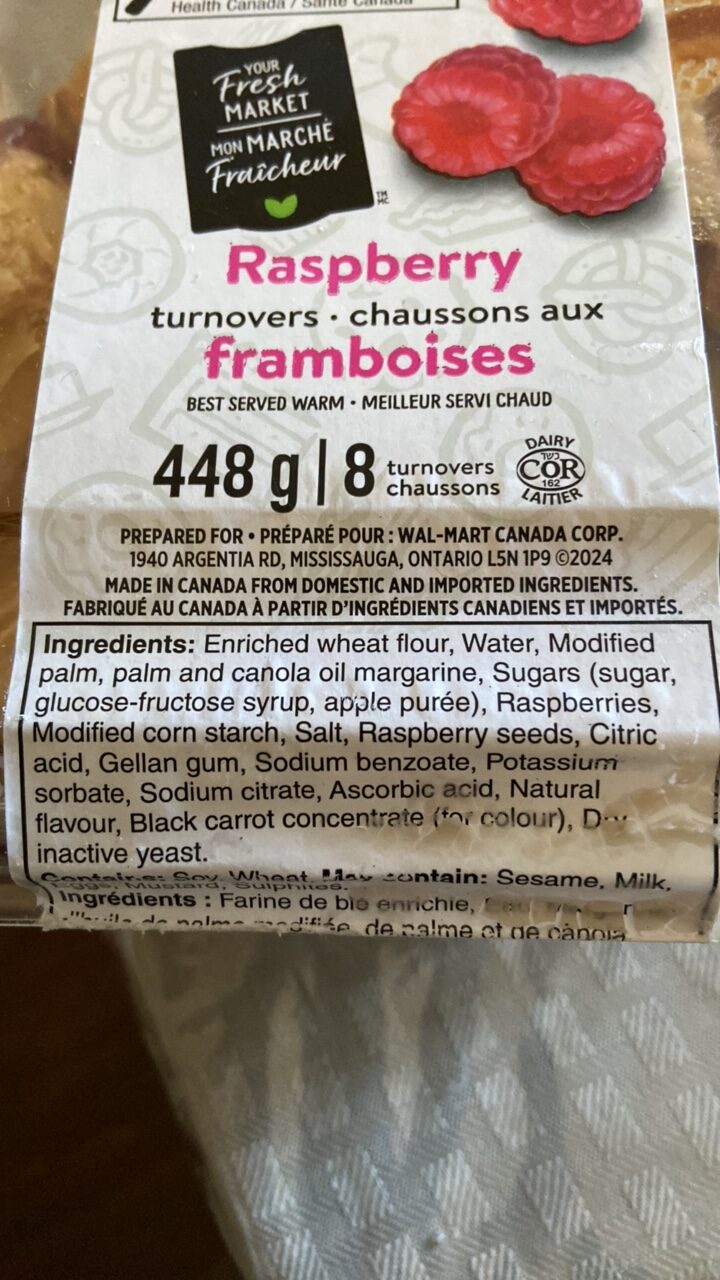
Barcode: 627735272184
Raspberry turnovers
HALAL
📝 Reason: Most ingredients are plant-based or synthesized and thus Halal. Food additives used are all found in the provided Halal ECodes list. However, ‘natural flavour’ can originate from animal or plant sources, and in the absence of clear sourcing or Halal certification, it is classified as Doubtful (2). According to Islamic law, ambiguity in sourcing or processing makes a product doubtful (Quran 5:3, IFANCA). Therefore, the product overall is Doubtful until further clarification of ‘natural flavour’ is obtained.
🏷️ Category: Pastries
📄 Certificates: Dairy, Best Served Warm, Vegetarisch
Ingredients:
Details
Understanding the Halal Status of Raspberry Turnovers
Raspberry Turnovers are a delicious pastry treat made with a variety of ingredients, some of which raise questions regarding their Halal status. This post aims to clarify whether Raspberry Turnovers are Halal, discussing each ingredient along with their E-numbers and certification context.
What Makes Raspberry Turnovers Halal?
The overall Halal status of Raspberry Turnovers is categorized as HALAL. Most of the ingredients used in the production of these pastries are plant-based or synthesized, therefore compliant with Halal dietary laws. However, one ingredient, ‘natural flavor,’ is marked as doubtful without further specification on its source.
Ingredient Breakdown
Let’s delve into the specifics of each ingredient:
- Enriched Wheat Flour: This ingredient is derived from wheat with added vitamins and minerals, thus it is Halal and plant-based. More Info
- Water: Pure water is inherently Halal. More Info
- Modified Palm: Plant-derived and Halal, provided it is not adulterated. More Info
- Palm and Canola Oil Margarine: Made from plant fats and Halal unless mixed with non-Halal emulsifiers. More Info
- Sugars: Sourced from plants and generally regarded as Halal. More Info
- Glucose-Fructose Syrup: Derived from corn/plant, making it Halal. More Info
- Apple Puree: Sourced from pure apples, hence it is Halal. More Info
- Raspberries: Fruit naturally categorized as Halal. More Info
- Modified Corn Starch: This is plant-derived, making it Halal. More Info
- Salt: A mineral that is Halal. More Info
- Raspberry Seeds: Natural seeds from raspberries are Halal. More Info
- Citric Acid (E330): Usually derived from fermentation processes, it’s Halal. More Info
- Gellan Gum: A fermentation product deemed Halal. More Info
- Sodium Benzoate (E211): A synthetic preservative that is Halal. More Info
- Potassium Sorbate (E202): Yet another synthetic preservative classified as Halal. More Info
- Sodium Citrate (E331): A salt of citric acid that is synthetically made and Halal. More Info
- Ascorbic Acid (E300): Known as Vitamin C, typically plant-based or synthetic, which is Halal. More Info
- Natural Flavour: Since it may derive from animal or plant sources, its status is doubtful unless specified. As stated in the Quran (5:3), ambiguity in even one ingredient raises concern, making the product overall considered doubtful until clarified. More Info
- Black Carrot Concentrate: A vegetable extract that is Halal. More Info
- Inactive Yeast: Considered Halal as it is a fungus. More Info
Certification Context
While many of the ingredients in Raspberry Turnovers hold a Halal status, the doubt surrounding ‘natural flavor’ insists on caution for consumers. In practice, this means further clarification regarding its sourcing is critical for ensuring the pastries truly align with Halal dietary requirements. As Islamic law emphasizes, any ambiguity can render a product doubtful (Quran 5:3).
With certifications in place for dairy, and guidelines suggesting they are best served warm, Raspberry Turnovers remain a wonderful addition to any pastry collection. Their delicious flavor and delightful texture are complemented by a conscience toward Halal standards.
As awareness grows regarding Halal dietary needs, always ensure that you check the labels, ask the manufacturers about their sourcing, and when in doubt, opt for alternatives that offer clear certifications.
