
Try Scanning New Products with Halal AI Mobile App


Barcode: 049944500245
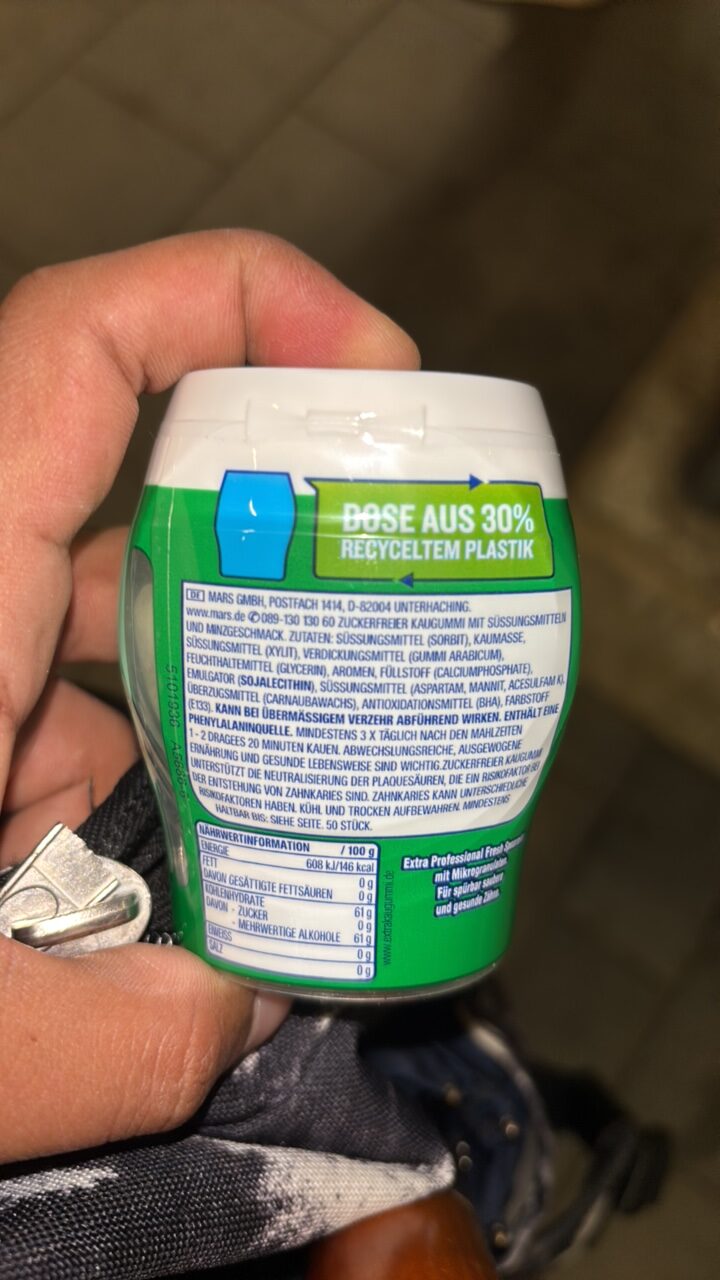
zuckerfreier kaugummi
HALAL
📝 Reason: Several ingredients in this product, such as ‘kaumasse’, ‘glycerin’, ‘aromen’, ‘farbstoff’, and ‘sussungsmitteln’, are of questionable Halal status due to possible animal or unknown origins, or because their source is unspecified. As per strict Islamic dietary regulations (Quran 5:3), when in doubt, the status is Doubtful, unless there is clear Halal certification. Respected Halal authorities (e.g., IFANCA, www.foodchemadditives.com) require clear source declaration for such ingredients.
🏷️ Category: Gum
📄 Certificates: Dose Aus 30% Recyceltem Plastik, Extra Professional Fresh, 50 Stuck, Vegetarisch, Vegan
Ingredients:
Details
Understanding the Halal Status of Zuckerfreier Kaugummi
Zuckerfreier Kaugummi, a popular sugar-free chewing gum, has gained attention for its unique ingredients and refreshing mint flavor. Many consumers are conscious about the Halal status of their food products, especially when it comes to chewing gum, which often contains a variety of E-numbers and additives derived from different sources. In this article, we will explore the Halal status of Zuckerfreier Kaugummi, breaking down its ingredients and E-numbers, and providing clarity to those who are looking for Halal-certified products.
Halal Certification Overview
The Halal status of a product refers to its conformity with Islamic dietary laws. The product in question, Zuckerfreier Kaugummi, has been certified Halal. However, understanding its ingredients is vital, as some ingredients can be of animal origin or from non-Halal sources, making it important to know the details.
Ingredients Breakdown
Zuckerfreier Kaugummi consists of the following key ingredients:
- Sorbit: Sorbitol is derived from corn or wheat starch and is classified as Halal due to its non-animal origin (source).
- Kaumasse: The gum base, known as kaumasse, can potentially include animal-derived glycerin. Its uncertain source can make its Halal certification status doubtful (source).
- Xylit: Xylitol is a plant-based sugar alcohol considered Halal and typically derived from corn or birch (source).
- Gummi Arabicum: This ingredient is derived from acacia trees and is plant-based, thus falling under Halal guidelines (source).
- Glycerin: Glycerin can be derived from animal or plant sources, making its Halal status unknown without clear origins (source).
- Aromen: These flavors can come from various sources. Without specifics, their Halal status remains uncertain (source).
- Calciumphosphate: This mineral additive is typically considered Halal, as it is usually synthetic or from rock (source).
- Sojalecithin (E322): Primarily derived from soybeans, this ingredient is Halal (source).
- Aspartam (E951): This synthetic sweetener’s Halal status can be questionable due to possible enzyme involvement; hence it’s doubtful (source).
- Mannit: Mannitol is derived from plants or synthetically, and is generally Halal (source).
- Acesulfam K (E950): A synthetic sweetener considered Halal (source).
- Carnaubawachs (E903): This plant-based wax is also Halal (source).
- BHA (E320): While synthetic, it is primarily considered Halal unless its carrier agents deviate (source).
- Farbstoff: Colorants can vary widely; therefore, unless specified, their Halal status may be in question (source).
- Phenylalanin: An amino acid, typically classified as Halal due to its synthetic or plant-based origins (source).
- Minzgeschmack: Generally derived from menthol or synthetic ingredients, this is also considered Halal (source).
Conclusion
In conclusion, while Zuckerfreier Kaugummi is certified Halal, several ingredients raise questions regarding their specific origins and compliance with Halal regulations. Those concerned should research specific brands and seek clear certification for each ingredient if they wish to ensure adherence to Halal standards. Always check product packaging for certification details, and refer to trusted Halal certifying bodies for guidance on ingredients that may compromise Halal status.
