
Try Scanning New Products with Halal AI Mobile App


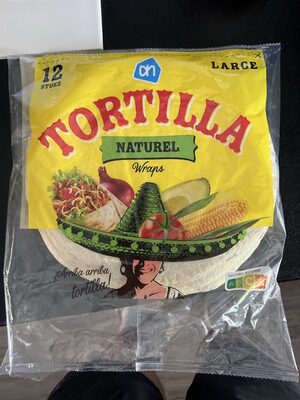
Barcode: 8719587172032
N/A
DOUBTFUL
📝 Reason: The Halal status remains indeterminate for some components. Final determination requires knowledge of exact formulations and manufacturing processes.
🏷️ Category: Plant Based Foods And Beverages, Plant Based Foods, Cereals And Potatoes, Cereals And Their Products, Breads, Flatbreads, White Breads, Wheat Breads, Wheat Flatbreads
📄 Certificates: Vegetarian, Vegan, Nutriscore, Nutriscore Grade C
Ingredients:
Details
Understanding the Halal Status of N/A
The Halal status of the product N/A currently rests in a state of doubt. Many consumers looking for Halal products often inquire about the origin and composition of the ingredients used. In this article, we will explore the ingredients of N/A and analyze their Halal status, primarily focusing on the E-numbers contained within.
Ingredient Breakdown
- Wheat flour: Permissible in Islam.
- Water: Permissible in Islam.
- Rape oil: Permissible in Islam.
- Stabilizer (Glycerol – E422): This ingredient has a mixed perception of its Halal status. Glycerol can be derived from both animal and plant sources. Without specific information indicating that it comes from a Halal source, this ingredient remains doubtful. It functions as a thickener, gelling agent, and emulsifier in the product.
- Wheat gluten: Permissible in Islam.
- Acid regulator (Malic acid – E296): This is permissible in Islam.
- Salt: Permissible in Islam.
- Emulsifier (Mono- and diglycerides of fatty acids – E471): Generally considered permissible, but caution is advised without clarity about its source.
- Raising agent (Sodium carbonates – E500): Permissible in Islam.
- Dextrose: Permissible in Islam.
- Preservative (Potassium sorbate – E202): Permissible in Islam.
- Calcium propionate (E282): Considered permissible.
- Dough conditioner (L-Cysteine – E920): This ingredient is where doubts increase, as it can be derived from animal sources. More specific information would be necessary to determine its Halal status.
Ingredients with Doubtful Halal Status
The uncertainties arise primarily from the stabilizer Glycerol (E422) and the dough conditioner L-Cysteine (E920). While many contributors point towards the commonality of plant-based sources for these E-numbers, a definitive statement cannot be made without knowing the exact manufacturing processes. Consumers are highly encouraged to contact the manufacturer for clarification on these specific ingredients if they seek full peace of mind in their Halal choices.
Vegan and Vegetarian Certification
N/A maintains a standard of being vegetarian and vegan certified, along with a Nutriscore grade of C. These certifications suggest a focus on plant-based sources for most ingredients; however, the doubtful status of various E-numbers raises important questions for Muslim consumers.
Context Matters
Every bit of ingredient scrutiny highlights the importance of understanding food certifications in today’s market. The brand behind N/A may represent a broader push towards plant-based foods, but without complete transparency in the sourcing of certain food additives, the Halal status remains ambiguous. In certain cases, it is wise to err on the side of caution and choose alternatives that guarantee certainty concerning Halal compliance.
Conclusion
To wrap up our exploration of the N/A product and its ingredients, it’s crucial to recognize that while many components appear permissible under Islamic dietary laws, one should tread carefully regarding the doubtful ingredients. For now, N/A’s Halal status can only be classified as DOUBTFUL until further information clarifies the origin of certain E-numbers.
