
Try Scanning New Products with Halal AI Mobile App


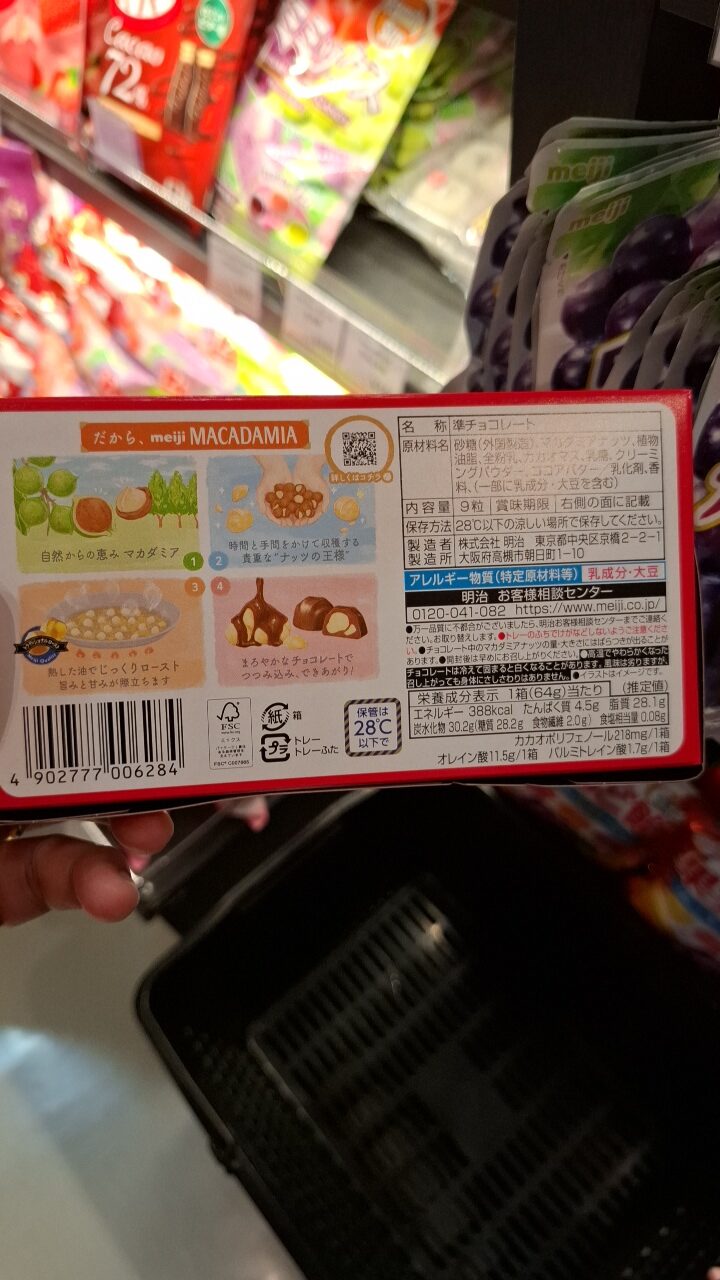
Barcode: 4902777006284
meiji macadamia
HALAL
📝 Reason: The majority of the ingredients in Meiji Macadamia are plant-based or dairy and generally Halal by default according to Islamic dietary law (Quran 5:3). However, the presence of non-specific ingredients such as ’emulsifier’ and ‘flavoring’ introduce doubt, as these could contain animal-derived or alcohol-containing components. Without Halal certification or clear sourcing for such ambiguous ingredients, they must be marked as Doubtful, which according to the rules means the final product status results in ‘Doubtful’. See IFANCA guidelines: https://www.ifanca.org/consumer/ingredients/.
🏷️ Category: Chocolate
📄 Certificates: Fsc, Tray, Vegetarisch
Ingredients:
Details
Understanding the Halal Status of Meiji Macadamia
The Halal status of products is a significant concern for many consumers adhering to Islamic dietary laws. Meiji Macadamia is a popular chocolate product that has garnered attention. The product is generally categorized under chocolates and is primarily made with ingredients that are mostly plant-based or dairy. According to Islamic law (Quran 5:3), most of these ingredients can be considered Halal.
Ingredients Overview
Meiji Macadamia contains several ingredients: sugar, macadamia nuts, vegetable oil, whole milk powder, cocoa mass, lactose, creaming powder, cocoa butter, emulsifiers, flavoring, and soybean. Let’s dive deeper into each ingredient to assess their individual Halal status:
- Sugar: Typically Halal unless processed with bone char from non-Halal slaughtered animals. Commercially available sugar generally poses no issues unless specified otherwise. (source)
- Macadamia Nuts: These nuts are completely plant-based and naturally Halal. (source)
- Vegetable Oil: This oil is Halal unless mixed with animal fats, making it suitable for consumption. (source)
- Whole Milk Powder: Halal if sourced from cows, buffalos, or camels, as long as it’s not mixed with any Haram substances. (source)
- Cocoa Mass: Derived from cacao beans, which are plant-based, ensuring its Halal status. (source)
- Lactose: As a milk sugar, lactose is Halal unless mixed with Haram enzymes, which are rare. (source)
- Creaming Powder: A blend of milk and vegetable products, it is generally Halal unless containing Haram derivatives. (source)
- Cocoa Butter: Extracted from cocoa beans, this ingredient is also plant-based and Halal. (source)
- Emulsifier: This is where ambiguity arises. Emulsifiers can be plant or animal-derived, and without specific E-Codes or disclosures, their source remains unclear. This uncertainty classifies them as Doubtful. (source)
- Flavoring: This ingredient may include natural or synthetic additives, including alcohol or animal-derived components, thus marking it as Doubtful due to the lack of detailed disclosure. (source)
- Soybean: Soybeans are plant-based and thus Halal. (source)
Understanding Doubtful Ingredients
While the majority of Meiji Macadamia’s ingredients are Halal, the presence of emulsifiers and flavoring introduces uncertainty. Since these ingredients lack a clear source, it is crucial for consumers who strictly adhere to Halal dietary guidelines to be cautious. As per guidelines from the Islamic Food and Nutrition Council of America (IFANCA), ambiguous ingredients should be treated with skepticism, resulting in the overall product being categorized as ‘Doubtful’. For more information, please review IFANCA’s guidelines.
Conclusion
In summary, while Meiji Macadamia has a significant number of Halal-compliant ingredients, the ambiguous nature of the emulsifier and flavoring makes it a product that could be viewed as ‘Doubtful’. If Halal certification is paramount for you, consider reaching out to the manufacturer for clarity on specific ingredient sourcing or choosing products with transparent certifications.
