
Try Scanning New Products with Halal AI Mobile App


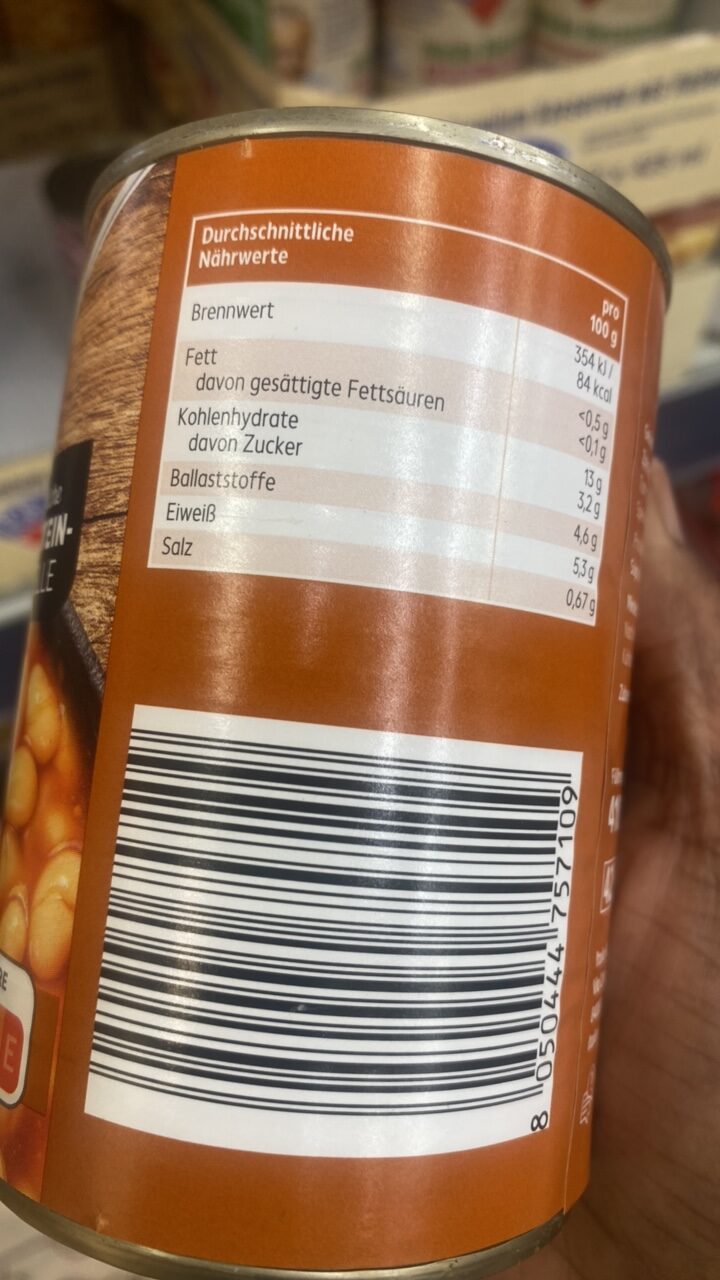
Barcode: 8050444757109
Unknown
HALAL
📝 Reason: All the listed ‘ingredients’ are nutritional components or macronutrients, not actual food additives, ECodes, or named chemical additives. No ingredient indicates the presence of haram animal derivatives, alcohol, or doubtful substances based on the provided and cross-referenced information. Hence, under Islamic law (Quran 5:3), they are halal unless otherwise specified. See IFANCA for further general halal standards.
📄 Certificates: Vegetarisch
Ingredients:
Details
Understanding the Halal Status of Unknown
When it comes to food products like the one named Unknown, many consumers wonder about their halal status. This inquiry is particularly important for those who adhere to Islamic dietary laws. In this blog post, we will explore the ingredients and provide a thorough explanation of why this product is certified halal.
Ingredient Breakdown
The ingredients listed for Unknown include: brennwert, fett, davon gesättigte fettsäuren, kohlenhydrate, davon zucker, ballaststoffe, eiweiß, salz. Let’s break these down one by one:
Brennwert (Caloric Value)
Brennwert refers to the caloric value or energy content of the food. It is not classified as an ingredient but rather a nutritional metric, hence it does not have any halal-related concerns. For more detailed information, you can refer to this source.
Fett (Fat)
Fett translates to ‘fat’. Unless the source of fat is specified (such as derived from animals), it is generally considered halal by default. If the fat comes from plant sources, it remains halal. You can find further information on this at Islamic Portal.
Gesättigte Fettsäuren (Saturated Fats)
Gesättigte fettsäuren means ‘saturated fats’. Like fat, saturated fats are part of the nutritional composition and do not raise halal concerns, as they are not ingredients themselves. More about saturated fats can be found at NCBI.
Kohlenhydrate (Carbohydrates)
Kohlenhydrate refers to carbohydrates, another macronutrient that is naturally halal by its origin. You can gain more insight into carbohydrates in this article.
Zucker (Sugars)
Zucker refers to sugars. Sugars are typically halal unless processed with animal bone char or alcohol, which is usually not the case here. For verification, check out IFANCA’s FAQs.
Ballaststoffe (Fiber)
Ballaststoffe means ‘fiber’, which is always plant-derived and remains halal in nature. You can read more about dietary fiber here.
Eiweiß (Protein)
Eiweiß refers to protein. Unless specified as animal-derived, it is presumed to be from non-animal or plant-based sources, which are halal. For further reading, visit Eufic.
Salz (Salt)
Lastly, Salz means ‘salt’. Salt is a mineral and is universally accepted as halal. For more details about salt, refer to this entry.
The Certification of Unknown
Unknown also holds a vegetarian certification, which further aligns with halal dietary guidelines, as it avoids animal-derived ingredients. All the mentioned components ensure that none violate halal principles as per QURAN (5:3) and verified by standards set by organizations like IFANCA.
Conclusion
In conclusion, based on the analysis of the ingredients and their sources, as well as the vegetarian certification, we confidently state that Unknown is halal. Consumers can enjoy this product without reservations, knowing it complies with Islamic dietary laws.
